Guides
Outdoor dining in winter: making the terrace season last
A full terrace is an important part of the season for many restaurants, bars and hotels. With the right planning it stays busy even as the evenings get cooler. This guide shows how to lay out seating zones, choose a suitable patio heater, keep things simple for your team and make guests comfortable.
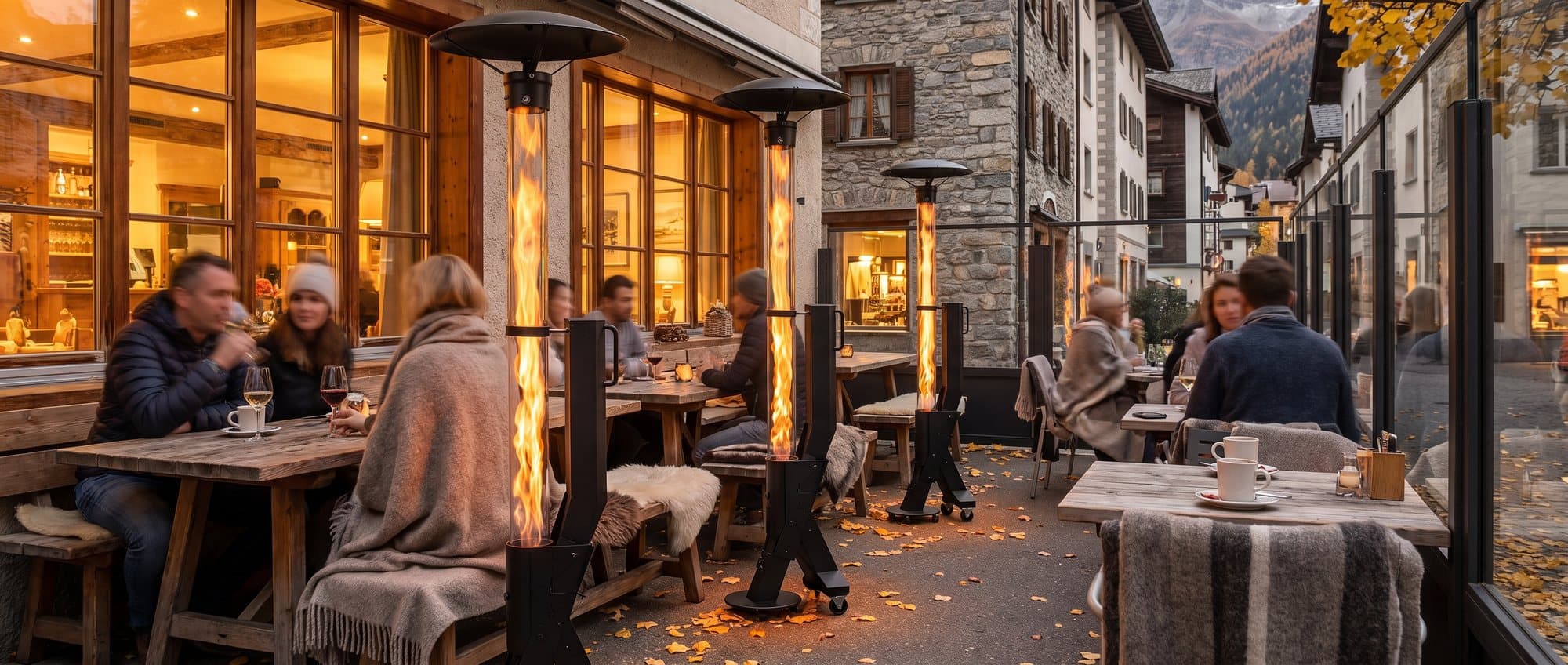
Read the terrace first: plan seating zones
Before thinking about equipment, look at the terrace itself. Not every seat is equally popular in autumn: tables against the wall or behind a windbreak stay occupied longer than those on an exposed corner.
- Find the wind: where is it draughty? Exposed seats need a windbreak – and are less suited to units with an open flame.
- Create zones: group tables into islands that can be warmed together rather than spreading heat sources evenly.
- Keep routes clear: service routes, entrances and escape routes must not be narrowed by equipment.
- Roof or no roof: covered areas and open spaces often need different solutions.
Which patio heater suits your business?
Hospitality businesses usually rely on one of three options: gas heaters, electric infrared heaters or pellet fire columns. Under awnings and roofs, fixed infrared heaters are often the most practical. On open terraces, mobile units have the edge.
A pellet fire column like the Feuertube needs neither gas bottles nor a power connection and stands on castors with a brake – it goes where the guests sit and is put away after closing. Then there is the visible flame in the glass tube: an eye-catcher that makes the terrace recognisable from the street. The Feuertube is for open-air use only, not under a roof.
How many units you need depends on the size of the terrace, the table layout, wind protection and the time of year. A blanket figure would not be serious – we are happy to advise on your outdoor area and quote by quantity.
Pellet logistics: supply, storage, restocking
With pellets, supply becomes predictable: no gas bottles to swap and store, just a stock of pellet bags in a dry place.
- Pellets: standard 6 mm wood pellets, certified ENplus A1 quality recommended.
- Plan consumption: one tank holds 3 kg and lasts around two hours on average. For an evening service, allow for several fills per unit.
- Storage: dry and sheltered – damp pellets burn poorly.
- Within reach: one opened bag per terrace zone saves trips during service.
A routine for staff: step by step
A fixed routine keeps things simple, even when shifts change. A checklist for your team might look like this:
- 01Set up
Before service, roll the Feuertubes into position, check the distance to parasols, awnings and textiles, and apply the brake.
- 02Check the grate and fill
Take out the grate, check the openings, put it back. Fill the pellet tank from the top – up to 3 kg.
- 03Light early
Light through the ignition opening for 20–30 seconds with the supplied burner – about 20 minutes before the first guests, since that is how long full flame takes.
- 04Set the flame
Using the ventilation grille at the back: open for a full flame up to the hat, closed for about half height.
- 05During service
Top up while the fire is still burning well. If wind blows the flame out, hold the burner briefly to the ignition opening.
- 06After closing
Let the fire burn out, empty the ash drawer regularly (every 5–6 hours of use) and store the units protected from rain and dew.
Guest comfort and rules
Warmth alone does not make a winter terrace. Wool blankets or sheepskins on the chairs, seat cushions, glass windbreaks and hot drinks on the menu are part of it. Many guests appreciate finding blankets ready rather than having to ask.
Before the season, also check what applies at your location: permits for outdoor seating, and rules from the municipality, fire authority or landlord on open fire and outdoor heaters. These rules differ from place to place.
The Feuertube must be protected from rain. Plan a dry storage spot – or a cover – for rainy days.
Frequently asked questions
How many patio heaters does a restaurant need?
It depends on the area, table layout, wind protection and season. We do not give a blanket figure – we advise on your outdoor area and quote by quantity.
Can the Feuertube stand under an awning?
No. The Feuertube is intended for open outdoor areas only, not under a roof or awning. Keep a safe distance from flammable materials.
How much work is it for staff?
Fill, light, top up and empty the ash. One tank lasts around two hours on average, the ash drawer is emptied every 5–6 hours. With a short checklist the routine settles in quickly.
Do I need a permit?
Every municipality handles this differently. Before the season, check with the municipality, fire authority and landlord what applies to outdoor seating and heaters.
What happens when it rains?
The Feuertube must not be used or left standing in the rain. On its castors it can be moved quickly to a dry spot.
More guides
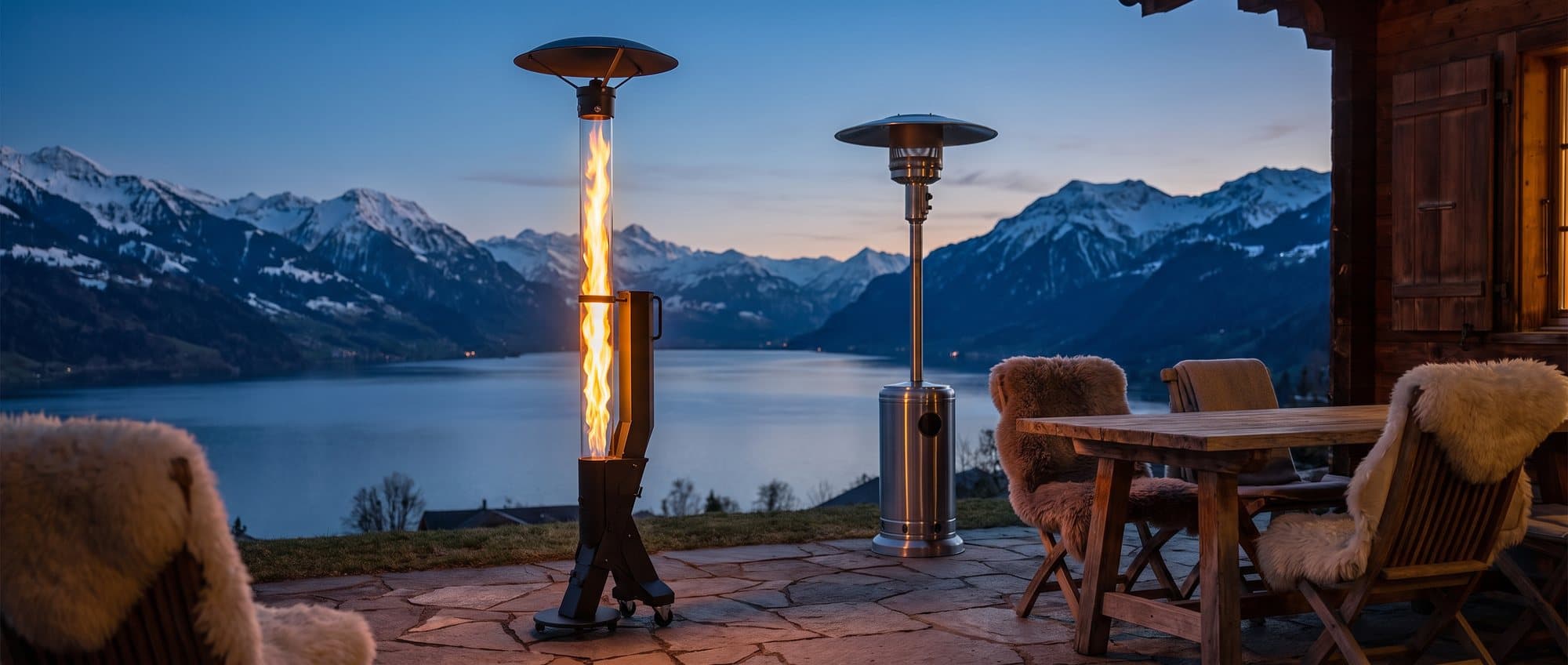
Patio heaters: gas, infrared or pellet? The comparison
Gas, infrared or pellets: energy source, placement, ambience and everyday use in an honest comparison.
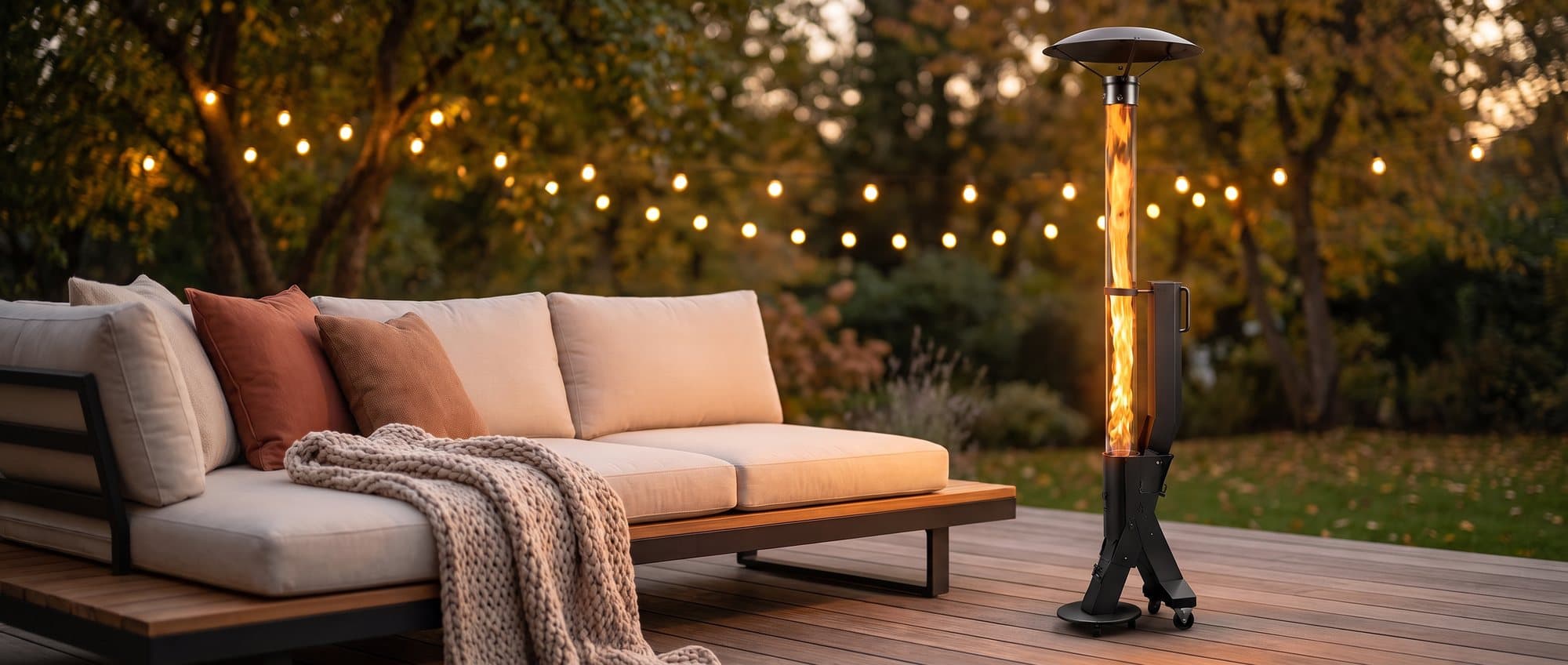
An alternative to the gas patio heater – no bottle needed
The silhouette of a mushroom heater, fuelled by wood pellets: what changes compared with gas.
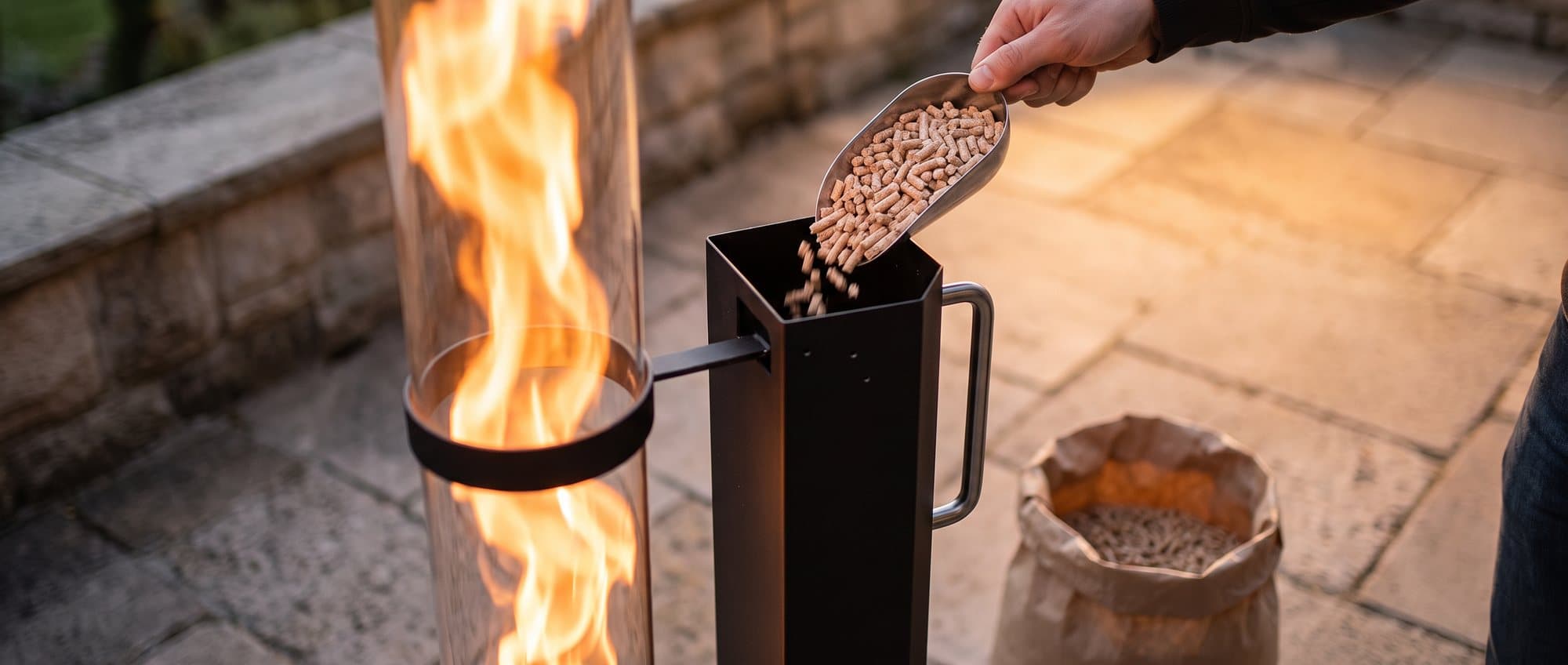
Pellet fire column: how a pellet patio stove works
The principle, the right pellets, burn time and operation step by step – from filling to ash.